
1 hr 30 min
Lake Tekapo Stargazing Experience
Gaze at the cosmos in a Dark Sky Reserve with powerful telescopes, hot chocolate, and marshmallows
Reserve
Hand-picked by our editors — only the best 5 stargazing experiences from 12 reviewed.
Verified partners for every tour, free cancellation where available, and instant confirmation on every booking.
1 hr 30 min
Gaze at the cosmos in a Dark Sky Reserve with powerful telescopes, hot chocolate, and marshmallows
Reserve
1 hr 15 min
Journey into one of Earth's darkest skies with expert guides, professional telescopes, and astro-lasers
Reserve
1 hr 45 min
Journey to a mountaintop observatory in one of Earth's premier dark sky reserves for telescope viewing
ReservePrices from verified partners. Availability updates in real time at checkout. Free cancellation policies apply where shown.
The landmarks, rooms, and views travelers on this tour remember — all visible on a single visit.
This peak provides 360-degree views of the Mackenzie Basin. It is the core location for the lake tekapo mount john observatory stargazing tour.
Mount John provides a professional, high-altitude research environment, while Cowan's Observatory offers a more accessible, intimate setting for those seeking a guided celestial tour.
| Feature | Top pick Mount John Observatory | Cowan's Observatory |
|---|---|---|
Altitude |
1,031 meters | 720 meters |
Accessibility |
Mountain road access required | Near township center |
Observatory Equipment |
Research-grade telescopes | Portable high-power telescopes |
Viewing Environment |
Open summit peak | Sheltered crater basin |
Primary Focus |
Scientific research and education | Intimate guided stargazing |
Lake Tekapo mount john observatory stargazing tour tours |
Available | Available |
| See tickets → |
Verdict: Choose Mount John for its scientific significance and alpine views, or select Cowan's Observatory for convenience and easier access to lake tekapo mount john observatory stargazing tour tickets.
Choose your ticket, select your date, and reserve in under two minutes. Secure checkout handled by our verified partner.
Instant confirmation by email, with a mobile voucher you can save offline. No printing, no queuing at a collection desk.
Arrive at the entrance, show your voucher on your phone, and walk in. Most tickets include priority or skip-the-line access.
Practical details for your visit straight from our verified partners — hours, access, rules, and how to get there.
1 Motuariki Lane
Main check-in point
Follow the private road signs from the base facility to the summit. A road access fee applies for private vehicles during the day.
Temperatures at the summit drop significantly at night. Wear multiple warm layers, including a thermal base, windproof jacket, gloves, and a beanie.
Small personal bags are permitted during your lake tekapo mount john observatory stargazing tour. Security staff may conduct checks at the base before ascent.
Low-light photography is permitted, but flash usage is strictly prohibited to maintain dark-sky conditions. Tripods are generally not allowed inside the telescope enclosures.
The observatory facilities have limited accessibility for guests with mobility restrictions. Please contact the tour operator in advance to discuss specific needs for your lake tekapo mount john observatory stargazing tour.
Mobile phone use is discouraged during observations to preserve night vision. Keep devices on silent mode throughout the experience.
Families are welcome, though tours are best suited for children aged 6 and older due to the late hours and cold conditions. Ensure children are dressed appropriately for the mountain climate.
Food is not served at the summit. Guests are encouraged to dine in Lake Tekapo village before departing for their lake tekapo mount john observatory stargazing tour.
Pets are strictly prohibited at the observatory site. Only registered service animals are permitted with prior arrangement.
The road to the summit is private and requires a toll for daytime access. Tours often include transport, which simplifies logistics for your lake tekapo mount john observatory stargazing tour.
Best time to go, insider tips, nearby landmarks, and the cancellation fine print — flip through to skim what matters to you.
How crowds, weather, and events shift across the year.
June to August offer the longest periods of darkness for extended viewing. Temperatures are very cold, requiring heavy winter clothing.
Small details that turn a good visit into a great one.
Stargazing tours frequently sell out during peak seasons. Secure your lake tekapo mount john observatory stargazing tour tickets well in advance.
Non-bookable sights within a short walk — free to visit, easy to pair.
A historic stone church situated on the lake shore. It is a famous photography spot in the region.
Flexible, no hidden fees.
Full refunds are typically available if cancellations are made within the operator's specified window. Please review your booking confirmation for specific terms regarding the road access fee and tour costs.
Hand-picked options within walking distance — pick a district for vibe, or a specific hotel for convenience.
Premium lakeside rooms with mountain views
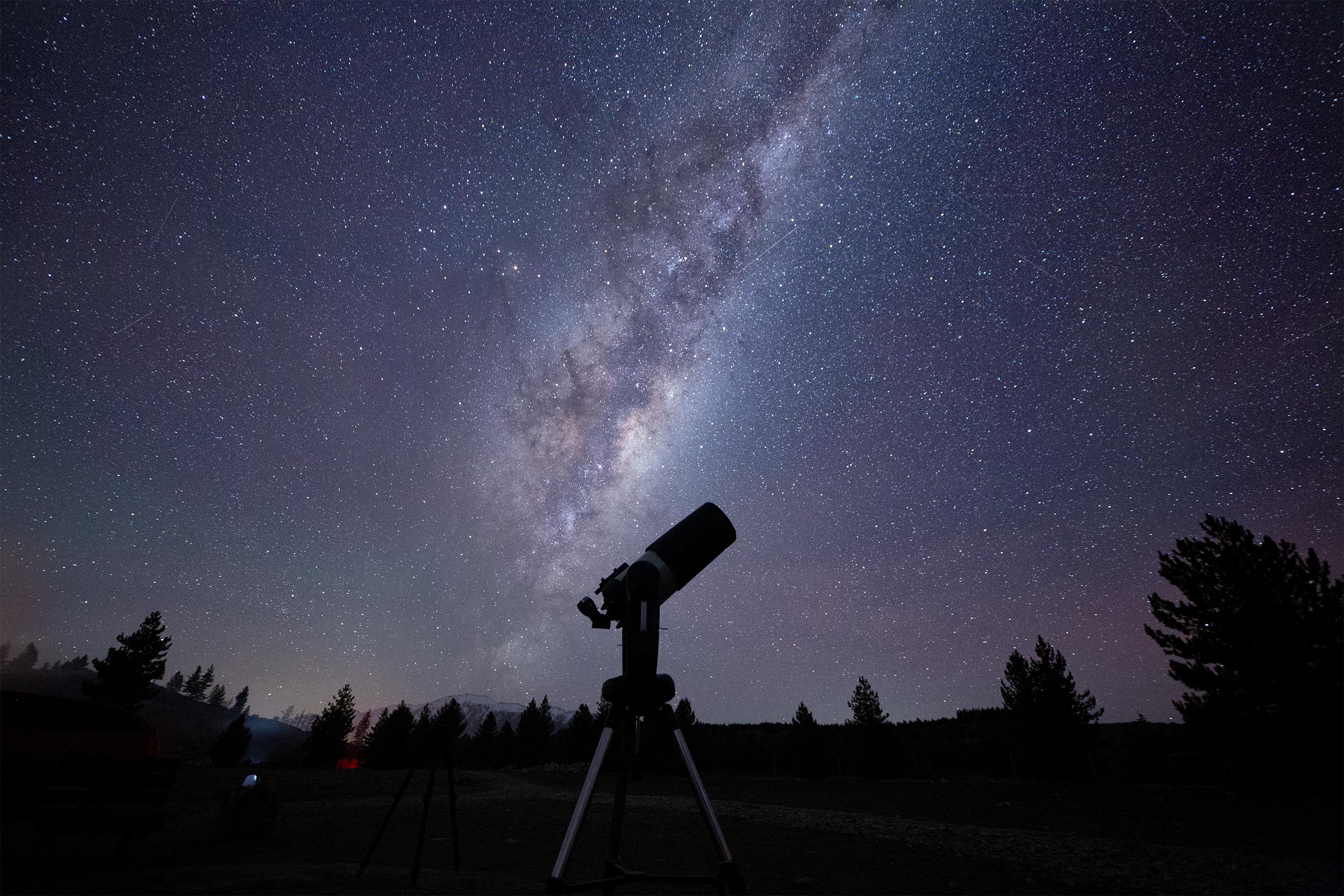
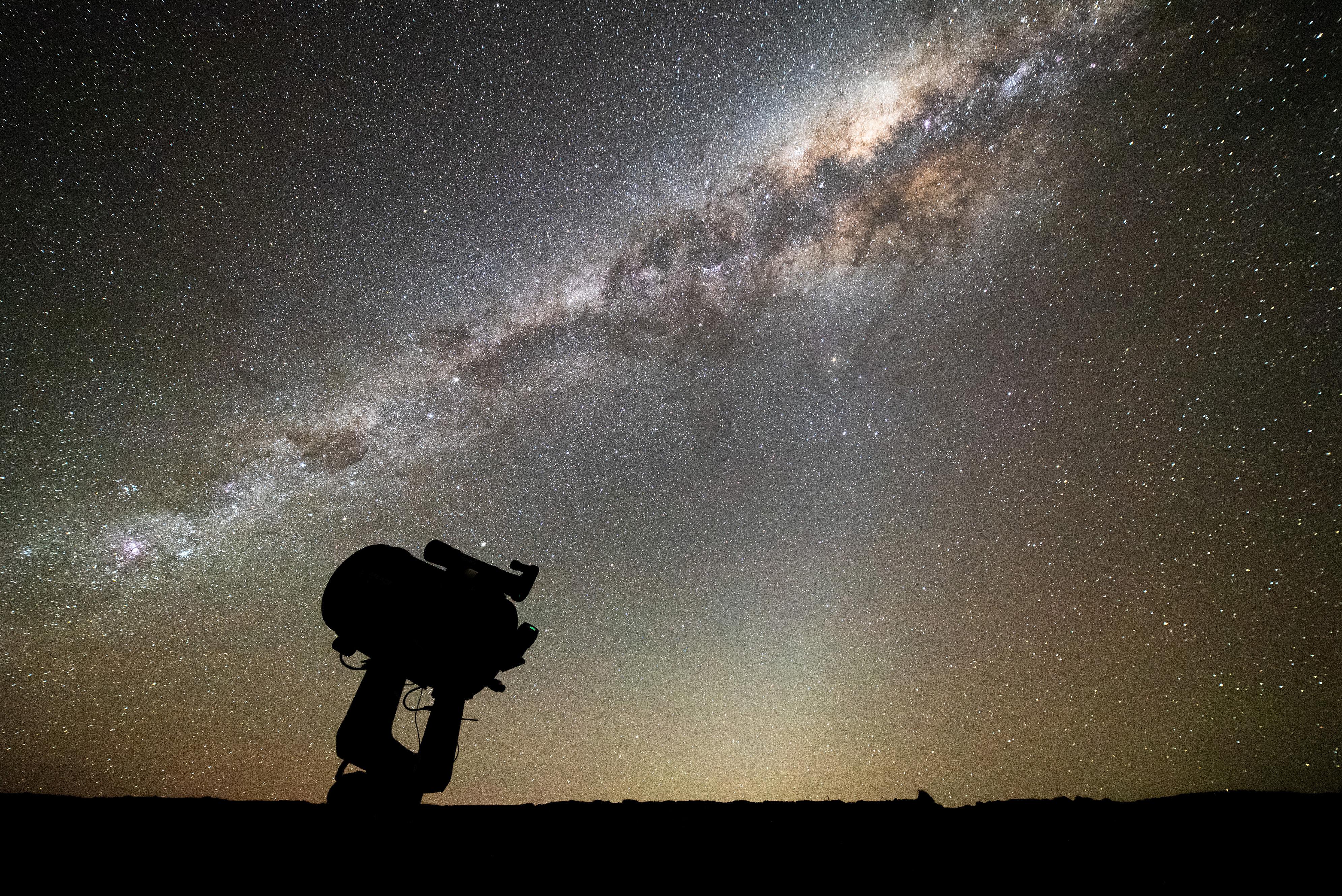
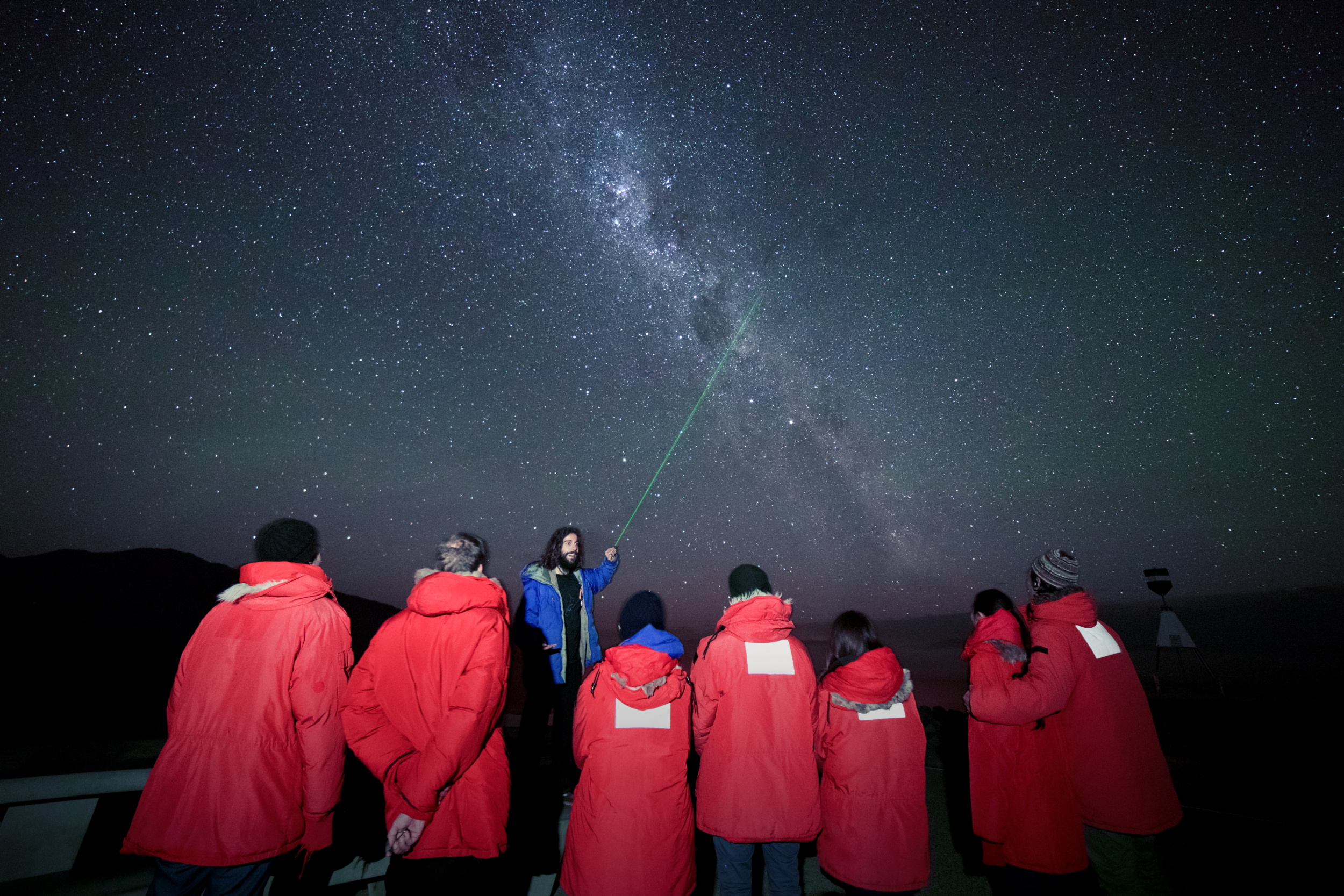
Mount John Observatory sits 1,029 metres above Lake Tekapo, purpose-built in 1965 to exploit the Mackenzie Basin's near-zero light pollution and 300-plus clear nights annually. The University of Canterbury operates four research telescopes here, including the country's largest optical telescope—a 1.8-metre McLellan instrument commissioned in 2004. In 2012, the International Dark-Sky Association certified the surrounding 4,300 square kilometres as the Aoraki Mackenzie Dark Sky Reserve, the largest in the southern hemisphere and one of only four Gold-tier reserves worldwide. That designation isn't ceremonial. Municipal bylaws in Lake Tekapo restrict outdoor lighting to specific wavelengths, shield all fixtures, and enforce curfews on sports field illumination. The lake tekapo mount john observatory stargazing tour operates through Earth & Sky, a commercial venture established in 2004 that holds exclusive after-hours access to the summit. Guides use handheld green lasers to trace the Southern Cross, Eta Carinae, and the Magellanic Clouds—satellite galaxies visible only below the equator. The summit experience pairs naked-eye constellation lessons with telescope sessions on 16-inch research-grade instruments. Winter tours run 8:00 PM to midnight; summer sessions shift to 10:00 PM to 1:00 AM to accommodate late sunsets. Groups cap at 60 visitors to preserve sightline quality. Cowan's Observatory, a second facility 15 minutes from the village, opened in 2013 as a crater-converted venue with a retractable roof. Its setup suits first-time stargazers—heated indoor briefings precede outdoor viewing through computerized Meade telescopes that auto-track planetary motion. The site's lower elevation means marginally higher light interference but better accessibility for families and mobility-limited visitors. Both observatories enforce red-light protocols; white torches are banned within 500 metres of any viewing platform. Aoraki Mackenzie's certification requires ongoing compliance. Annual audits measure sky quality using calibrated meters, and resident counts remain capped through district planning rules. The combination of regulatory rigor and geographic isolation keeps light domes—the orange glow visible above cities—absent from horizon lines. On clear nights, the Milky Way casts shadows, and the zodiacal light, a faint pyramid of interplanetary dust reflection, appears an hour after sunset. These phenomena, invisible in most populated regions, form the baseline for observatory-based stargazing experiences in Lake Tekapo.
"The Milky Way casts shadows here, and the zodiacal light appears an hour after sunset."
A step-by-step walkthrough of the visit — what you'll see, how long each stage takes, and the details that matter.
You leave the village an hour before your scheduled session, driving the winding gravel track to Mount John's 1,029-metre summit. At the observatory carpark, you join 40 other visitors under red-filtered headlamps—white light is prohibited. Your guide begins with a 20-minute outdoor constellation lesson, green laser tracing the Southern Cross and Alpha Centauri, our nearest stellar neighbor 4.37 light-years distant. You then split into three rotating groups. Group one enters the dome housing the 16-inch Meade telescope, currently locked on Jupiter; you watch four Galilean moons drift across the eyepiece field over five minutes. Group two gathers at the McLellan telescope's observation deck, where Saturn's rings appear as a pale gold bar bisecting the planet. Group three remains outside for Magellanic Cloud photography guidance—your phone's night mode captures the satellite galaxies as smudged thumbprints against the stellar backdrop. After 90 minutes, you rotate to the warming hut for hot chocolate while the next tour group ascends. The return drive offers a final view: the lake's bioluminescent algae glow faintly turquoise under starlight, a phenomenon your guide notes peaks in autumn months when water temperatures drop below 10°C.
The facility is open Monday through Sunday from 09:00–01:00. These hours accommodate daytime visitors and evening stargazers.
Yes, booking lake tekapo mount john observatory stargazing tour tickets in advance is highly recommended due to high demand.
Yes, but it is recommended for children 6 and older who can manage cold, late-night environments.
Yes, photography is allowed, but flash is prohibited during your lake tekapo mount john observatory stargazing tour.
The operator will notify you regarding cancellations or alternative arrangements if cloud cover makes viewing impossible.
Most guests take the guided transport provided by the tour operator for the lake tekapo mount john observatory stargazing tour.
No, food is not available on site, so plan to eat in the village before your lake tekapo mount john observatory stargazing tour.
Entrance is 0 NZD, though a road access fee applies for private vehicles during the day.
A typical lake tekapo mount john observatory stargazing tour lasts approximately 2 to 3 hours including transport.