
English| EUR
Suggested for you
More currencies
Choose a language
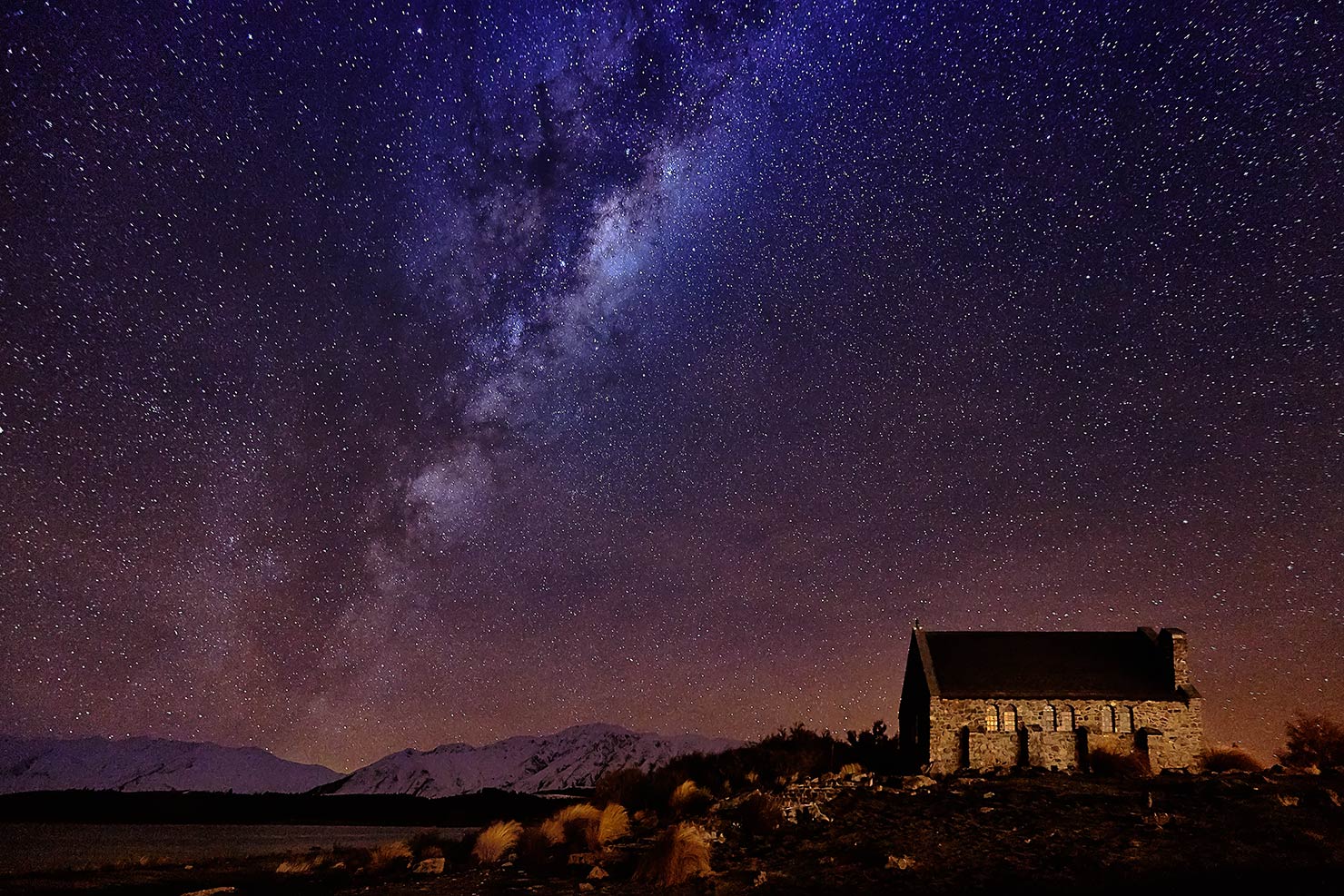
Lake Tekapo sits inside the Aoraki Mackenzie International Dark Sky Reserve, where light pollution measures among the lowest on Earth. Timing your visit around moon cycles, seasonal weather patterns, and southern winter months determines whether you see a handful of stars or the Milky Way stretched horizon to horizon.
Quick answer
The stargazing Lake Tekapo best time falls between April and September, when southern winter skies are darkest and the Milky Way core is visible overhead. New moon windows offer the clearest conditions, with zero lunar interference. Cloud cover increases during summer months, and full moon phases wash out fainter celestial objects regardless of season.
Lake Tekapo records fewer than 30 nights per year with total cloud cover, making it one of the Southern Hemisphere's most reliable stargazing destinations. The township enforces strict lighting ordinances across the entire Mackenzie Basin, and atmospheric conditions at 710 meters elevation produce exceptional transparency. Determining the optimal stargazing Lake Tekapo best time requires balancing three variables: seasonal weather stability, lunar phase darkness, and celestial object position. Southern winter months deliver the Milky Way's galactic core directly overhead between midnight and 03:00, while the Magellanic Clouds remain visible year-round as southern sky anchors. April through September brings cold, stable air masses that reduce atmospheric turbulence, sharpening star definition and improving photographic results. The International Dark Sky Reserve certification mandates downward-shielded outdoor lighting, and compliance audits occur quarterly to maintain Gold-tier status. Moon phase governs visibility more than any other factor. New moon windows produce Bortle Class 2 skies, where the Milky Way casts ground shadows and zodiacal light appears as a distinct cone above the horizon. First and last quarter moons permit observation until moonrise or after moonset, typically offering four to six dark hours per night. Full moon phases illuminate the landscape but obliterate nebulae, galaxies, and the Milky Way's fainter structural details. The Dark Sky Project operates nightly tours year-round, with demand peaking during new moon weekends between May and August. Booking windows fill earliest for winter new moon dates, often securing reservations three months ahead. Shoulder months—April and September—balance milder temperatures against slightly reduced Milky Way prominence, and availability improves compared to midwinter. Summer stargazing remains viable during new moon phases, though cloud probability doubles and the galactic core sits lower on the northern horizon after midnight. Visitors targeting specific celestial events, including meteor showers or planetary conjunctions, should cross-reference event dates with moon phase calendars and reserve accordingly.
“New moon windows produce Bortle Class 2 skies, where the Milky Way casts ground shadows and zodiacal light appears as a distinct cone above the horizon.”
The most favorable stargazing conditions occur during the winter months when longer, darker nights provide optimal viewing. To experience the deepest darkness, align your visit with the moon phase cycles, specifically around the new moon.
Cold, clear skies with 0°C to 8°C. Longer nights offer extended periods for observation.
Cool, variable weather from 5°C to 15°C. Transition period provides clear nights with budding constellations.
Warm nights from 10°C to 20°C. Shorter darkness duration requires precise timing during the late hours.
Mild temperatures ranging from 5°C to 14°C. Stable atmospheric conditions often result in high visibility.
Verdict: For the darkest skies and highest visibility, plan your visit during the winter months near the new moon, adhering to the best arrival window of 22:00–01:00.
The Dark Sky Project facility operates on a consistent schedule throughout the week to support stargazing planning in Lake Tekapo.
Costs for stargazing in Lake Tekapo depend on whether you choose independent viewing or a guided professional tour experience. Public access to the region remains open, while organized experiences require advance booking.
Verdict: Independent stargazing is free, while guided tours incur fees that vary based on the specific experience and inclusions selected.
The Dark Sky Project base is located at 1 Motuariki Lane, Takapō 7999, New Zealand. The most straightforward approach is by car via State Highway 8, which runs directly through the township.
State Highway 8 to Motuariki Lane
InterCity service to Lake Tekapo Village
From Lake Tekapo township center
Plan your arrival to align with the best arrival window of 22:00–01:00. Public parking is available in the vicinity of Motuariki Lane, but allow extra time to walk to the facility in darkness.
Lake Tekapo's sub-zero winter nights and high-altitude exposure demand specialized preparation beyond typical tour logistics.
Everything you need to know about stargazing lake tekapo best time
The stargazing Lake Tekapo best time is generally during the darkest hours of the night when the Milky Way is clearly visible. Aiming for the arrival window of 22:00–01:00 ensures you experience the sky at its most prominent.
Yes, the lunar cycle is a key factor when considering the stargazing Lake Tekapo best time. New moon phases provide the darkest skies, which are ideal for viewing deep-sky objects and constellations without interference from moonlight.
Independent stargazing at public spots is free, meaning there is an entrance fee of 0 NZD for accessing the area on your own. However, guided astronomy tours provided by organizations like the Dark Sky Project do incur their own individual fees.
The facility maintains consistent opening hours from 09:00–01:00 every day of the week to accommodate visitors. Planning your arrival during these hours allows you to align with expert-led tours or use the facility as a base for your astronomical observations.
Yes, you are welcome to visit for independent stargazing, as there is an entrance fee of 0 NZD for public access. The team at 1 Motuariki Lane provides resources and tours if you wish to enhance your experience beyond what is visible to the naked eye.
While the sky is clear year-round, the winter months from June to August offer the longest nights and crisp air, which are often considered ideal. Choosing this season helps optimize the stargazing Lake Tekapo best time for those seeking the darkest possible celestial viewing conditions.